October 11, 2026 · OHIO CANNABIS LIVE
Ohio’s New Gummy Limits: What Changed for Medical and Adult-Use Cannabis
Ohio’s October 5 rules cap adult-use gummies at 10 mg THC per serving and 100 mg per package. See what changed, how medical products differ, and our timeline from medical legalization to federal medical rescheduling.
Published October 11, 2026 · By Anthony D. Riley (Mastamynd) · Ohio Cannabis Live
Ohio, check the label before buying the same gummies you bought last month. The latest cannabis changes affect the amount of THC in a serving, the size of a package and the information on the label. Medical and adult-use customers do not always have the same options.
This topic is getting attention beyond cannabis media. NBC4 reported on the changes October 6, and MJBizDaily followed October 8. Their coverage reflects the questions shoppers are now bringing to the counter. For the actual requirements, Ohio Cannabis Live checked the state rules directly.
What changed for gummies and other products
Ohio Administrative Code 1301:18-4-06 took effect October 5, 2026. Here are selected limits in that rule:
| Product | Serving or unit | Package |
|---|---|---|
| Adult-use edibles | 10 mg THC maximum | 100 mg THC maximum |
| Medical edibles | 55 mg THC maximum | Ten whole servings maximum |
| Adult-use beverages | 10 mg THC per container | Up to 12 containers |
| Medical beverages | 55 mg per serving; 110 mg per container | 220 mg THC maximum |
| Vapes | 2 grams; 90% THC maximum | Up to three devices or cartridges |
| Flower | — | One ounce maximum |
A smaller gummy package does not mean a one-package daily purchase limit. Serving, package and transaction limits answer different questions. Nor should the gummy limits be applied to every other product: capsules, patches and oral products have their own provisions.
Why the medical distinction matters
Ohio still has a medical program alongside adult-use sales. A medical card is not just another name for an adult-use account. Patients need an active recommendation and registration, and the dispensary needs to recognize their patient status.
The March 24 medical dispensing rule permits up to 10 ounces of plant material and 60,000 mg of THC in other products per registered patient per day, unless the recommending physician imposes a lower limit. Registered caregivers have lower daily limits: 2.5 ounces and 15,000 mg. A package-size rule does not cancel those separate dispensing requirements.
Ask whether the item is being sold through the medical or adult-use side of the dispensary. That distinction matters before the transaction is completed, especially when a familiar product no longer appears on the adult-use menu.
Packaging changes deserve a closer look
Packaging and labeling rules effective September 11 require product identification, the universal THC symbol, the DCC seal and information specific to the product category. Edible labels also include ingredients, major allergens and a warning that swallowed products can have delayed effects. Packaging approval rules address child resistance and tamper evidence.
Read the serving information as well as the total package amount. Keep the label and receipt if something does not match the order. Ohio law also requires medical and adult-use edibles to remain in their original packaging whenever they are not actively in use.
From a shopper’s perspective, the useful comparison is the product, package quantity and final price together. A familiar brand name does not guarantee a familiar serving size. Check the current menu and ask the dispensary to explain a substitution before paying.
How Ohio got here: medical, adult-use and federal changes
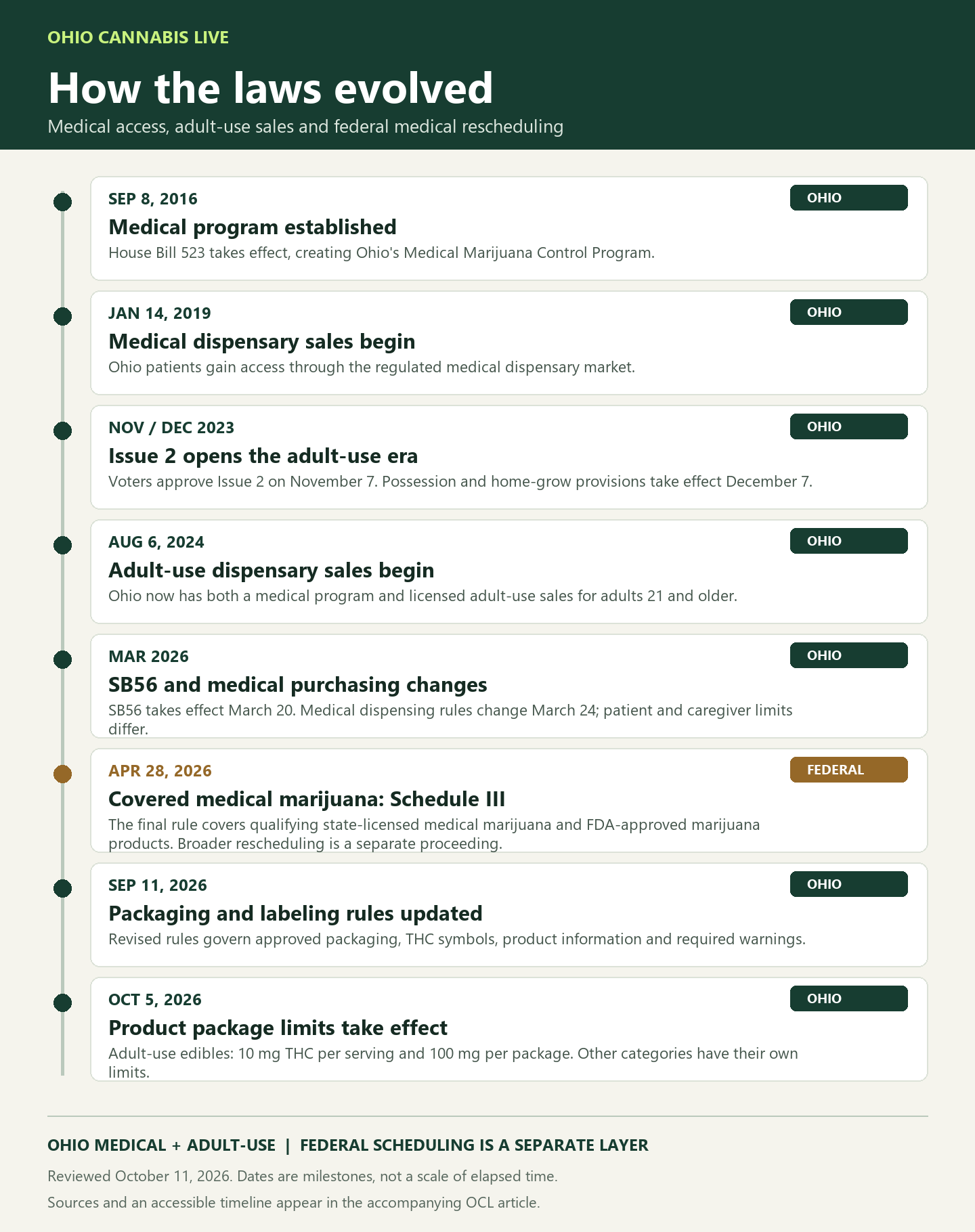
Read the timeline as text
- September 8, 2016: House Bill 523 establishes Ohio’s medical program.
- January 14, 2019: Medical dispensary sales begin.
- November 7 / December 7, 2023: Voters approve Issue 2; its adult-use possession and home-grow provisions take effect a month later.
- August 6, 2024: Licensed adult-use dispensary sales begin.
- March 20 / March 24, 2026: SB56 takes effect; revised medical dispensing limits follow.
- April 28, 2026 — federal: The final rule covering qualifying state-licensed medical marijuana and FDA-approved marijuana products takes effect.
- September 11, 2026: Revised packaging and labeling rules take effect.
- October 5, 2026: The product-package limits discussed above take effect.
Medical rescheduling is real—and its scope matters
The Justice Department announced the medical rescheduling action April 23. The final rule published April 28 places covered FDA-approved marijuana products and marijuana subject to a qualifying state medical license in Schedule III. It also establishes a federal registration pathway for qualifying medical businesses.
That action did not automatically move all adult-use marijuana into Schedule III. Broader marijuana rescheduling has a separate proceeding. Ohio’s permission to sell a product, a business’s federal registration obligations and the product’s federal scheduling are distinct issues.
For Ohio patients and consumers, the practical point is to know which rules apply to the purchase in front of you. Headlines alone cannot tell you whether a specific gummy, beverage or vape is available through your dispensary’s medical or adult-use menu.
Keep up with Ohio Cannabis Live
Watch our weekly livestream for updates, follow the reporting in our Newsroom, and become a free OCL site member. Our Deleted from YouTube archive keeps original OCL coverage connected to the community.
Sources and quoted excerpts
Reporting checked October 11, 2026. Quoted excerpts below are short passages from the linked sources. The article and chart are OCL’s synthesis.
- Ohio Administrative Code 1301:18-4-06 — product-package limits, effective October 5, 2026.
“The THC content for each portion or serving shall not exceed ten mg”
- Ohio Administrative Code 1301:18-4-20 — packaging and labeling, effective September 11, 2026.
“The net weight or volume of the contents contained within the package”
- Ohio Administrative Code 1301:18-4-19 — packaging approval.
“The package is tamper-evident”
- Ohio Administrative Code 1301:18-8-09 — medical dispensing limits, effective March 24, 2026.
“Ten ounces of medical cannabis plant material”
- Ohio Revised Code 3796.06 — forms, use and edible storage; SB56 version effective March 20, 2026.
“in the original packaging at all times when the products are not actively in use”
- Ohio Legislature — House Bill 523.
“Authorizes the use of marijuana for medical purposes”
- Ohio DCC Update — medical and adult-use sales milestones.
“Medical sales began January 14, 2019. Non-medical sales began August 6, 2024.”
- Ohio Secretary of State — Issue 2 initiative documents.Also see WOSU’s December 7, 2023 reporting on the law taking effect.
- Federal Register — medical marijuana final rule, published April 28, 2026.
“state-issued license to manufacture, distribute, and/or dispense marijuana or products containing marijuana for medical purposes”
- U.S. Department of Justice — April 23, 2026 announcement and scope of the medical action.
“the initiation of an expedited administrative hearing process to consider the broader rescheduling”
- NBC4/WCMH, Katie Millard — October 6, 2026, syndicated by AOL.Coverage of the changes reaching dispensary shelves; the limits and timeline here were checked against primary sources.
- MJBizDaily — October 8, 2026, “Here’s what products Ohio cannabis stores can no longer sell.”Additional coverage of the retail changes.
About Anthony D. Riley
Anthony D. Riley, known as Mastamynd, is the founder of Ohio Cannabis Live, an independent Ohio cannabis media platform established in 2019. His work brings Ohio reporting, education, livestreams and community conversations together. Learn more about Anthony and his work at anthonydriley.com.